Choosing a Mosaic for Your Room
The wall is not the whole room. This becomes obvious when you hang something that looked excellent in a close-up photograph and discover that, from the sofa, it has the visual authority of a postage stamp.
The opposite problem is also available. A piece can arrive with enough presence to reorganise the room before you have found the tape measure.
Choosing art gets easier when you begin with the view you will actually have. For Mixtape Mosaic, that means considering both the overall image and the physical cassette surface. The subject needs to work at your usual distance. The material gives you something more when you approach.
You do not need a professionally styled room. You need a place for the piece, a few measurements, and a reasonably honest assessment of what is already on the wall.
Begin where you sit
Stand at the entrance, then sit where you normally sit. Look at the proposed wall from both positions.
What else is in that view? Furniture, windows, shelves, another artwork, a television, the heroic cable arrangement beneath it. All of those things affect how a new piece will read.
Decide whether you want the mosaic to be the main focus or part of a larger arrangement. A focal piece benefits from enough space for its overall shape to register. A smaller piece can work as an intimate detail within a room, especially where you naturally get closer.
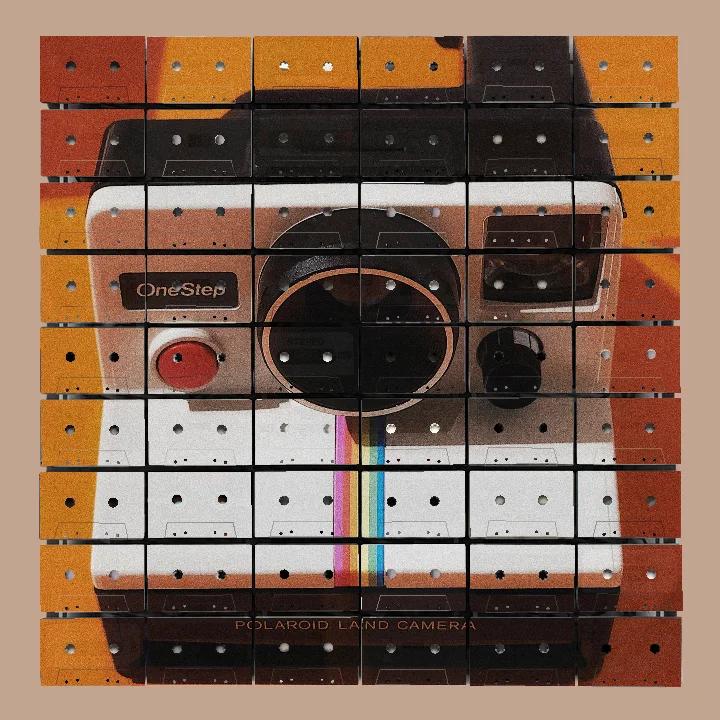
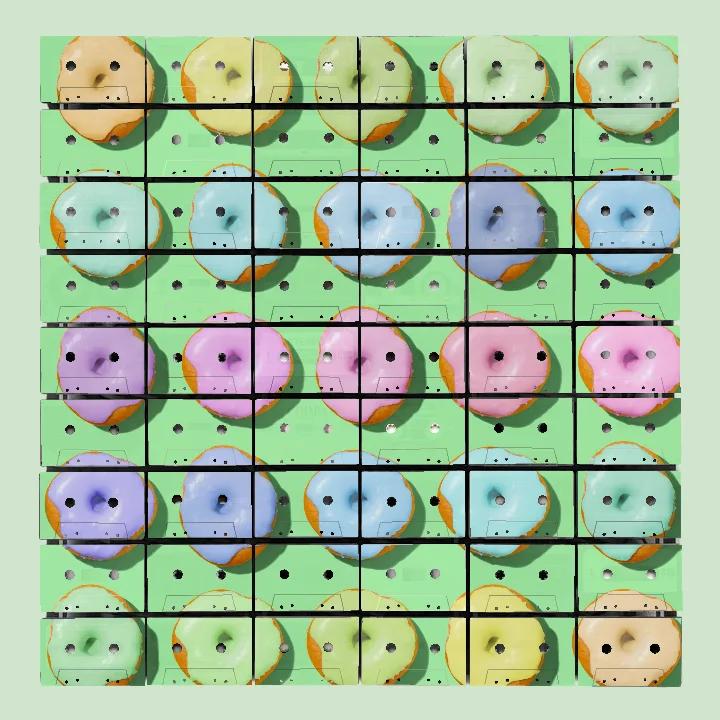
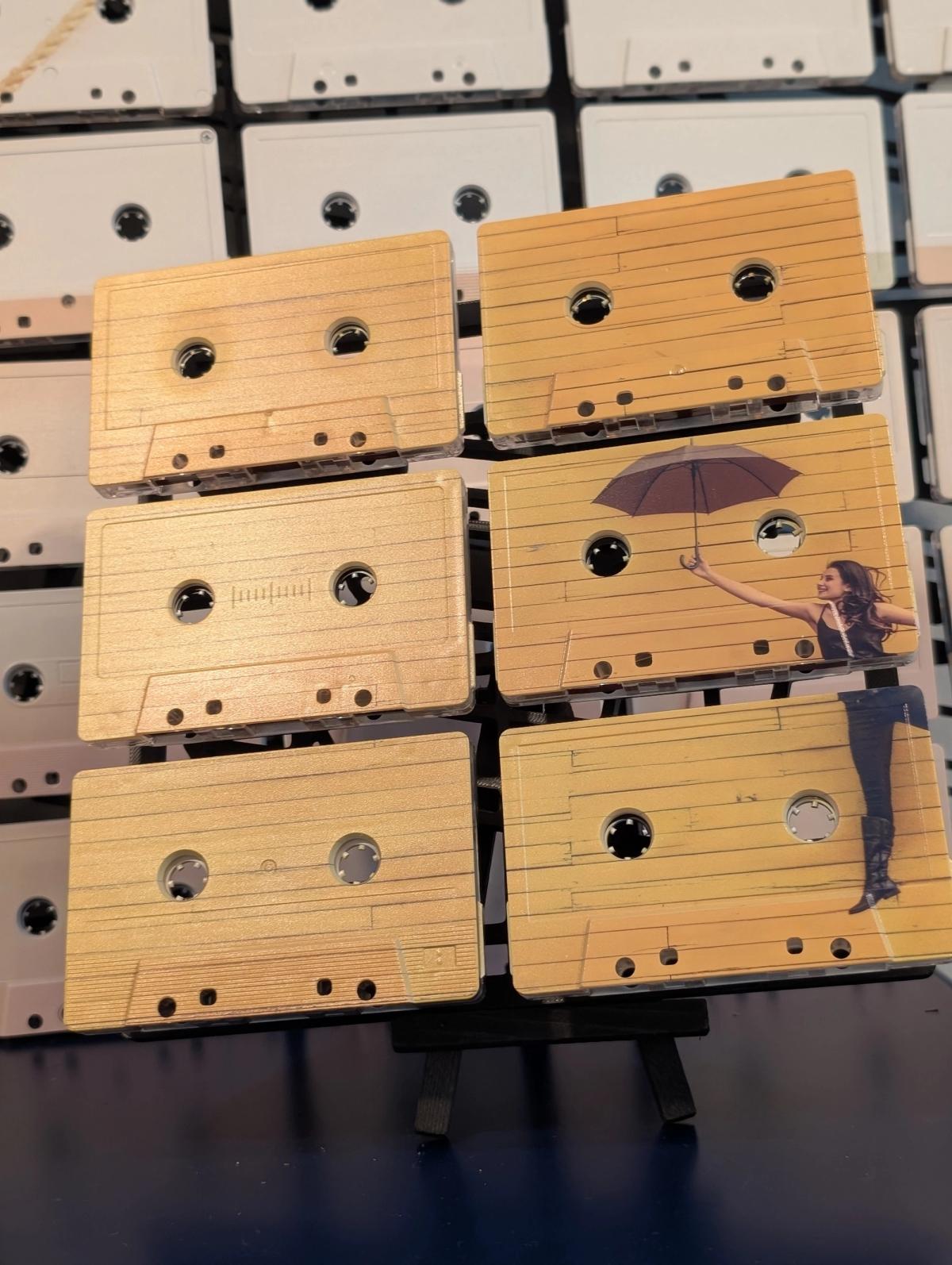
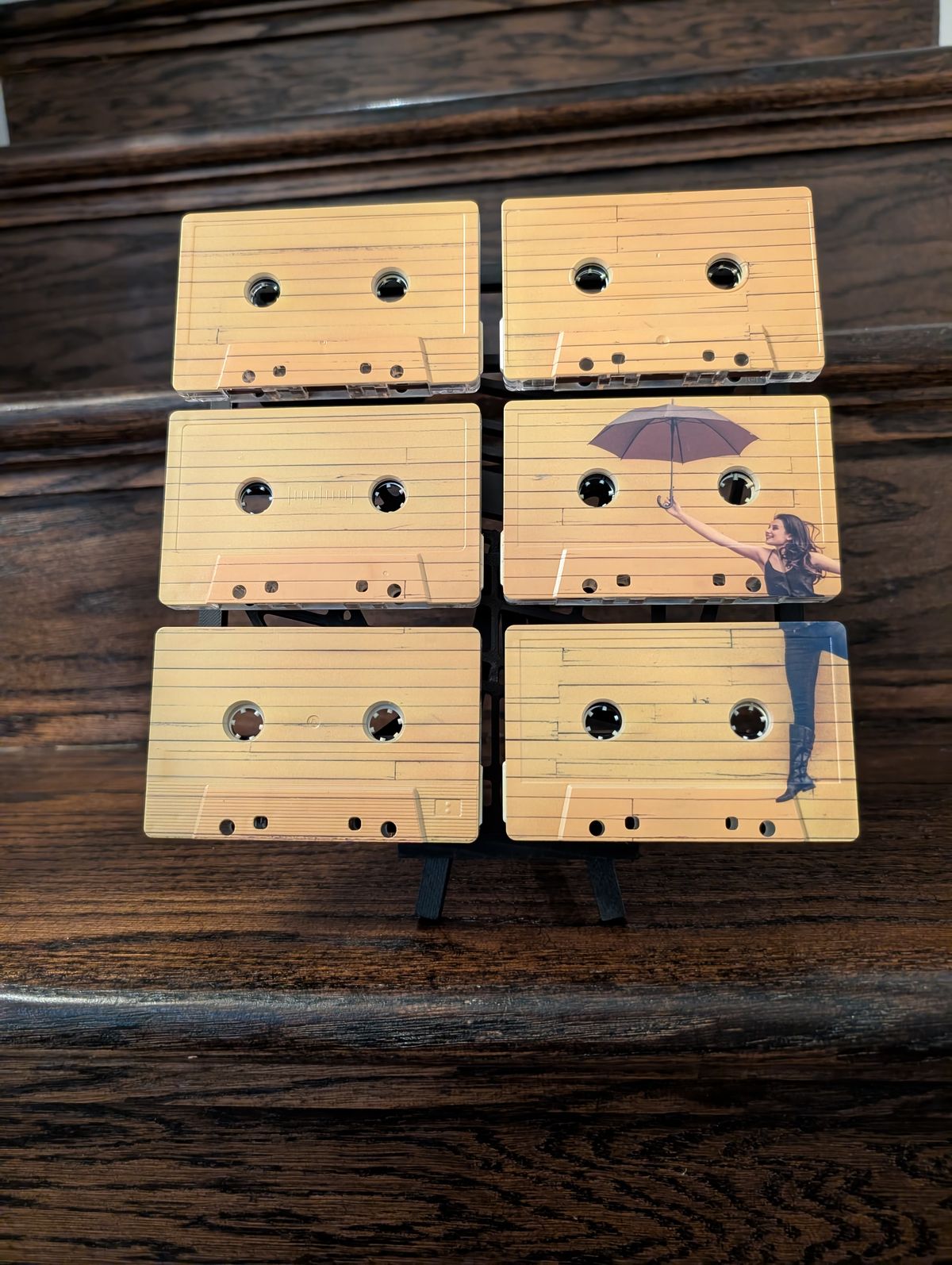
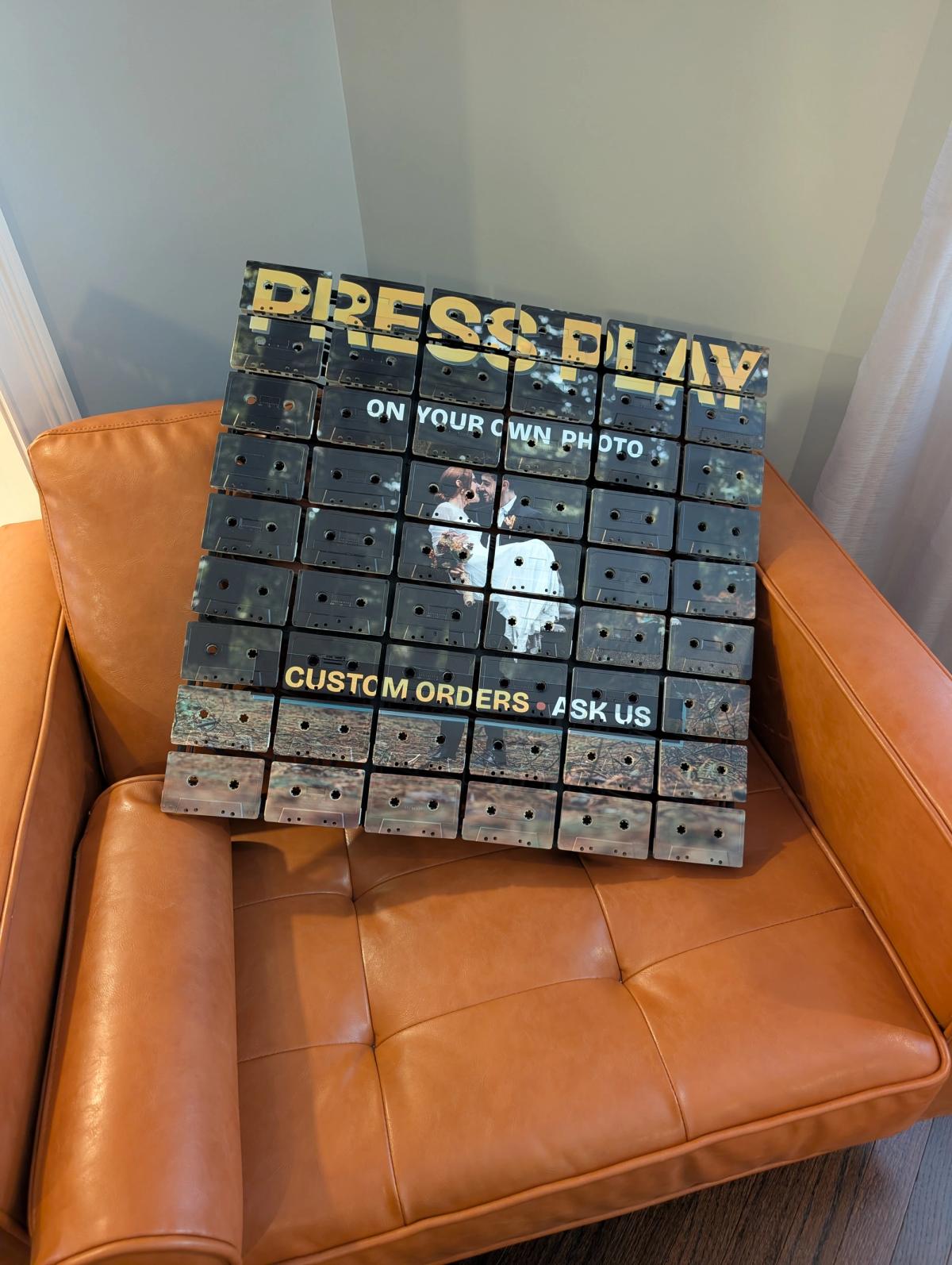
Our six-tape artwork shows that a compact build can still make the material idea clear. The larger custom-photo example shows another kind of presence. The right choice depends on the job you want the artwork to do.
Measure the artwork's footprint
Before ordering, check the dimensions of the selected configuration and mark that footprint on the wall. Low-tack painter's tape can help, provided it is suitable for your wall finish.
Then step back to your normal viewing position.
This quick exercise tells you whether the piece has enough presence, whether the shape suits the space, and whether it sits comfortably beside nearby objects. A square, a wide composition, and a taller composition will occupy the same wall differently.
Allow visual room around the outline. There is no universal number that makes an arrangement correct. A tightly composed wall can be effective; an isolated artwork can be effective. What matters is that the spacing feels deliberate.
The tape on the wall also has the advantage of being considerably easier to move than an installed artwork. Use that advantage while it is available.
Match the composition to the distance
If you will mostly see the artwork from across the room, strong shapes, clear contrast, and a recognisable subject are useful starting points.
If the piece will sit somewhere you pass closely, quieter imagery and visible cassette details may reward that proximity. Analog Reveal is worth exploring if the shells themselves are a large part of the attraction.
Neither approach is restricted to a particular size. The real question is how much of the image remains legible at the distance you expect.
A small figure may be exactly right for an intimate piece and easy to miss in a broad room view. A large graphic shape may carry beautifully from a distance but offer less detail than you want at close range. Compare both views.
Let the colour make one clear decision
Think of the artwork as either joining the room's palette or adding a new point of contrast.
To connect it with what you already have, pick up one or two colours from nearby furnishings or objects. Every colour in the image does not need a corresponding cushion. The cushions have their own lives to lead.
To make the mosaic the main colour event, give it a comparatively quiet surrounding area. The citrus piece is a useful example of a strong palette that could carry that role.
Do not choose solely by matching a paint swatch. You will also be living with the subject, the composition, and the material. A perfect match is of limited value if you do not particularly like the picture.
Start with an image you want to look at. Then find its relationship to the room.
Consider the side view
Mixtape Mosaic has physical depth. Where you place it determines how often you encounter that depth.
A wall seen at an angle can show the cassette edges and their shadows. A straight-on view gives more emphasis to the image. Light coming from the side can make the relief clearer; softer frontal light can make the composition feel more continuous.
Our note on art that changes as you move explains this in more detail.
For now, notice where daylight and lamps reach the proposed wall. Consider the evening view as well as the daytime one. Most rooms are used under more than one set of lighting conditions, although online photographs tend to imply that everyone lives permanently at eleven in the morning.
Check the practical fit
Use the current installation guidance for the configuration you order. The artwork is a physical assembly, so the wall and mounting arrangement deserve attention along with the image.
Drywall anchors are included. If installing on other wall types, different hardware may be required.
Before placing an order, check the selected size, preview, and current product information. If you are uncertain about the wall or the composition, contact the studio with the details. A specific question and a photo of the space are considerably more useful than hoping that “standard wall” is a recognised engineering category.
Choose for ordinary days
A room does not have to resemble a finished magazine photograph to deserve good art. It can contain toys, a charging cable, a chair nobody agrees on, and a piece you love.
The aim is to make the artwork feel present in your life, not merely successful in a photograph of it.
Choose the image you keep returning to. Give it enough scale to do its job. Let the cassette surface reward the occasions when you stop beside it. That is a sound basis for a decision, and it does not require replacing the sofa.
Find your configuration