Analog Reveal: Letting the Tapes Show
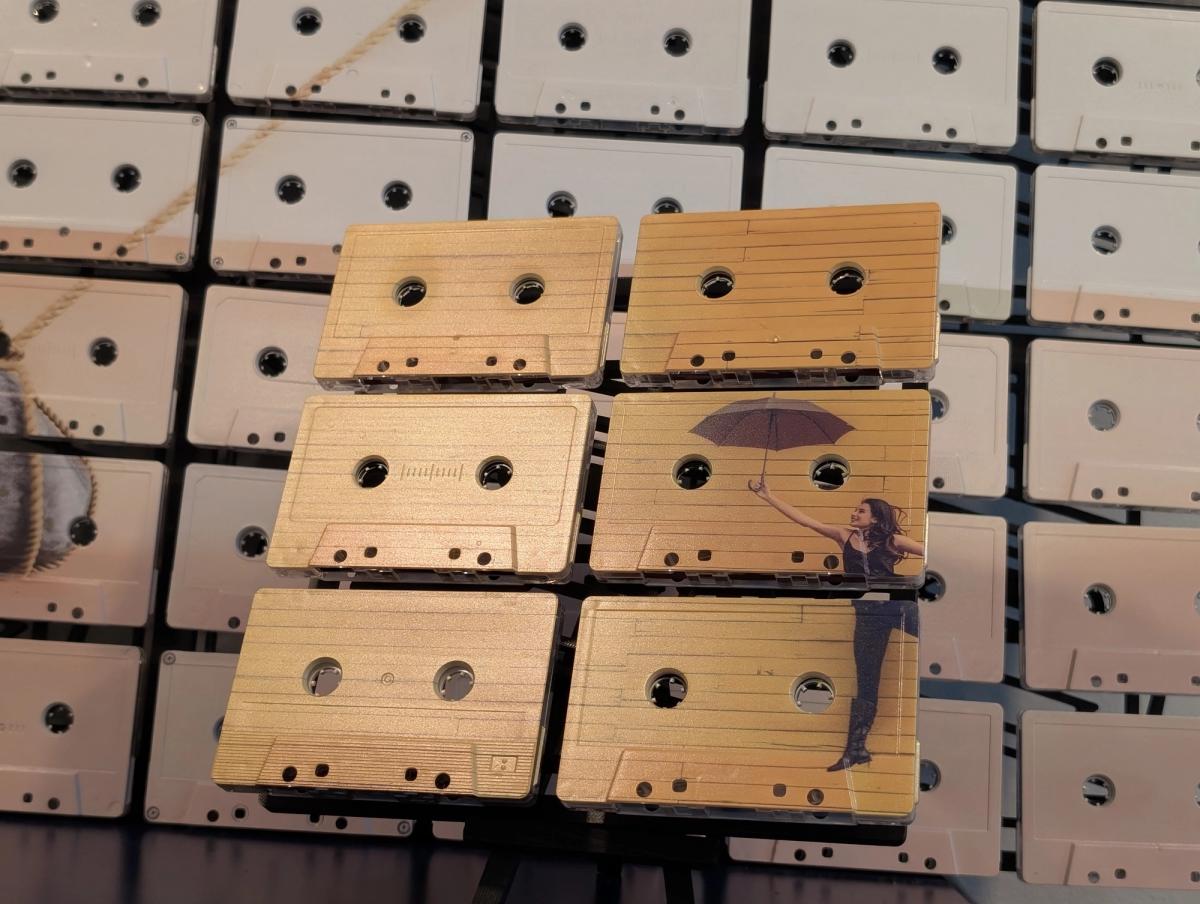
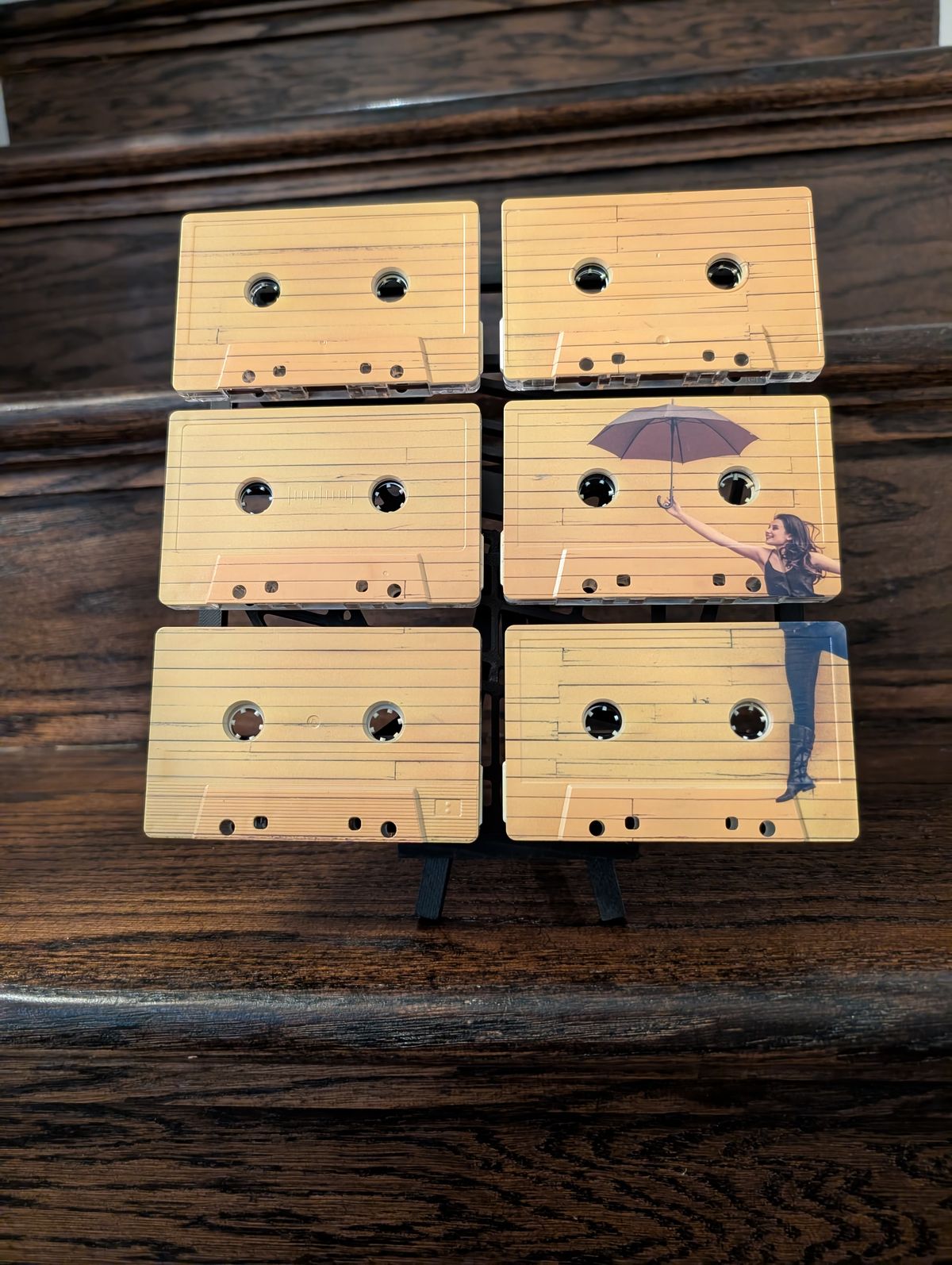
In the small six-tape piece, the figure and umbrella occupy part of a pale, lined surface. Much of the cassette face remains visible. The image has space around it, and the material has a clear role.
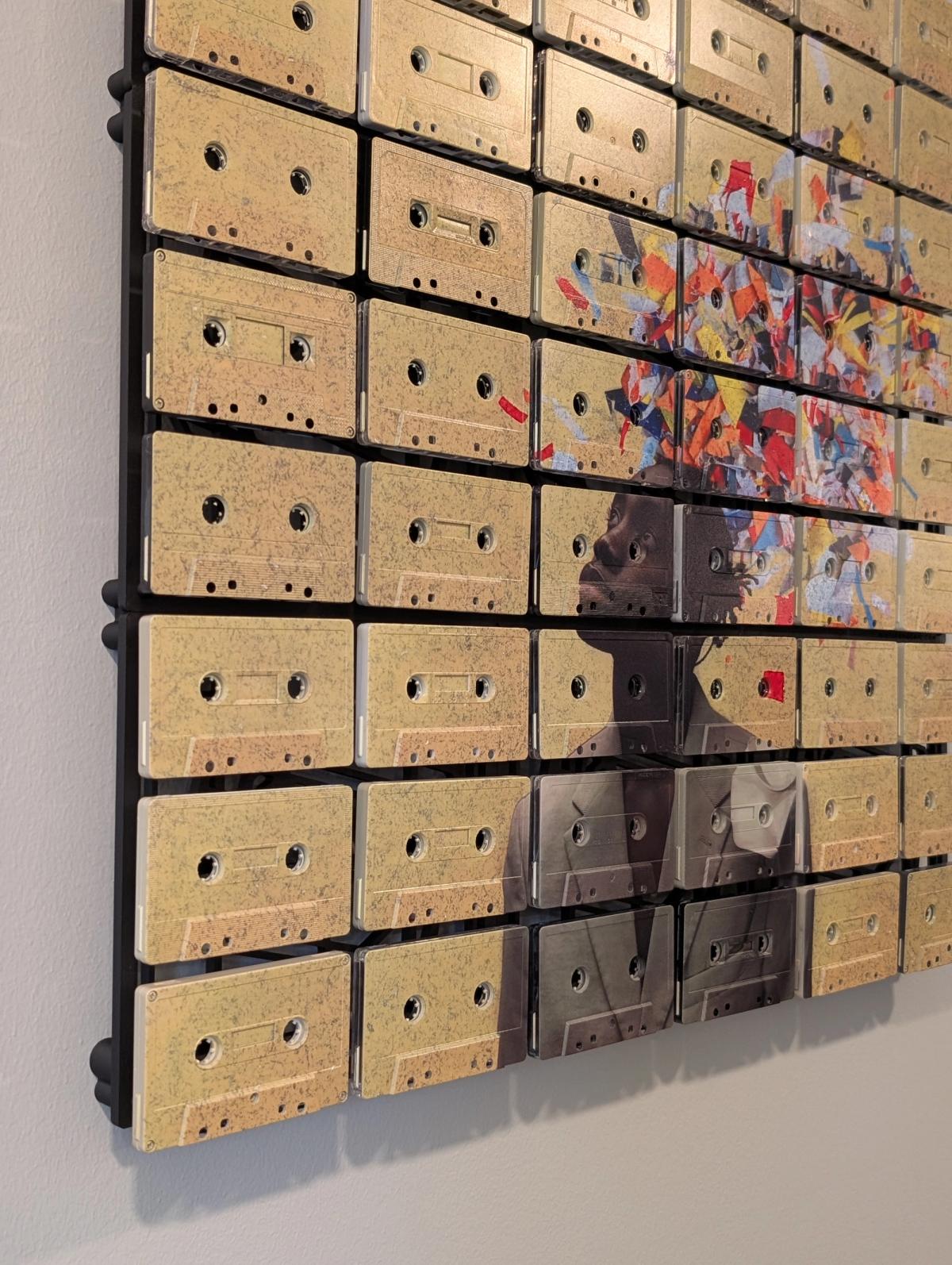
Look at the larger portrait and the same idea appears in a different form. A concentrated area of colour sits against quieter cassette surfaces. Your eye moves between the subject and the surrounding shell details.
This is the appeal of Analog Reveal: the artwork can leave room for you to see what it is made from. That room is designed. An unprinted area is still a decision.
Two things worth seeing
A cassette mosaic contains an image and a collection of real objects. You can give the image broad coverage, or allow more of those objects to remain visible.
Analog Reveal puts particular emphasis on that second possibility. Artwork uses open or transparent areas so that the cassette shells and their details can participate in the composition.
The important word is “participate.” A visible tape face should have a relationship to the subject. It might provide a quieter ground, frame a patch of colour, or introduce lines and marks that contrast with the image.
In the six-tape work, the figure is small enough for the pale surface around it to remain a strong part of what you see. The reel openings punctuate that field. The cassette edges break it into units.
There is quite a lot happening in the apparently empty part.
Looking at the smaller piece
The six-tape format makes the relationship particularly easy to study. You can count the objects, recognise their shapes, and see the image crossing them.
The pale horizontal lines run across the faces. The darker figure and umbrella provide a point of focus. The physical openings remain conspicuous, rather than disappearing behind a dense image.
That balance gives the piece a relatively quiet first impression and a more detailed close view. It does not need to cover every tape with a different event to justify the material.
The modest scale also makes the construction legible. There are enough units to make a mosaic, and few enough that you can keep track of them. For someone exploring the medium for the first time, that can be an appealing place to start.
Looking at the larger portrait
In the larger work, the portrait and colour have more surface to occupy. The surrounding cassette faces create a quieter field around that concentration.
The contrast is useful. Your attention lands on the image, then travels outward into the material. The tape grid connects both areas, so they still belong to one artwork.
The open portions are not equivalent to a blank white background on a screen. They contain physical detail. Vintage shells can carry differences in colour, labels, marks, and moulded features. Those differences become more visible when artwork gives them room.
This means Analog Reveal is partly a choice about how much material character you want to encounter. If you enjoy recognising the cassettes, the more open compositions offer a particularly direct way to do that.
Open space needs intention
It is tempting to think that more visible material always makes a piece better. It does not. A subject still needs a clear position, a useful scale, and a relationship to the surrounding space.
A very small face on a very large field may lose the expression you hoped to preserve. A crowded image can make the shell details difficult to distinguish. A hard edge in the artwork can either work with a cassette seam or sit awkwardly beside it.
These are composition questions. The preview helps answer them.
Start by looking at the main subject. Is it immediately clear? Does it have enough room? Then look at the open areas. Are they helping direct your attention, or merely occupying the rest of the rectangle?
An artwork need not be busy to be finished. Equally, “minimal” is not a licence to stop five minutes early. The quiet parts still have to earn their place.
Choosing this approach
Analog Reveal may suit you if the physical tapes are a large part of the attraction. It also works as a direction to explore if you like portraits, isolated figures, graphic shapes, or compositions with strong areas of open space.
It is less about a particular subject than a balance. The image remains important, but it shares attention with the surface.
Browse the Analog Reveal collection with that balance in mind. Look beyond the thumbnail. Examine the amount of shell detail visible around the subject, and consider how that detail might read at the size you want.
The photographs here show actual pieces rather than a promise that every future cassette will have identical markings. Real vintage material varies. The selected artwork and preview establish the composition; the shells supply their own particulars.
A quieter way to make a statement
A work can be distinctive without filling the room with colour. Material, negative space, and a well-placed subject can provide plenty of presence.
In the small piece, the umbrella and figure make their impression against a relatively restrained field. In the portrait, the image has intensity because there is calmer space beside it. Both invite you to look without explaining every part at once.
We value that range at Mixtape Mosaic. The brand can include an emphatic citrus grid and a quieter six-tape image. The common element is the considered relationship between artwork and cassette.
A familiar object deserves to be seen carefully. Sometimes the most effective way to make that happen is to leave part of it visible.
If that is the part of the work that draws you in, Analog Reveal is a good direction to explore. Bring your attention to the spaces around the subject. They are carrying more of the composition than they initially let on.
Explore Analog Reveal