The Label Beneath the Image
A faint line of lettering beneath a pale printed colour can be enough to interrupt the business of looking at a picture. The eye catches it, tries to read it, and suddenly the cassette is doing two jobs at once. It carries the new artwork. It also retains a small piece of its earlier identity.
This is one of the details we particularly love at Mixtape Mosaic: a little of the original label bleeding through a lighter-coloured print. Enough to suggest what the tape actually was. Sometimes enough to read.
I can spend an unreasonable amount of attention on a few millimetres of type. The larger composition has made a considerable effort to be seen, and here I am inspecting a side number.
Still. That side number belongs there.
A label was a working part
Before it became a surface for art, a cassette had to tell someone what they were holding. Its label might carry an artist, an album, a manufacturer, a catalogue number, or simply which side faced the player. Small lettering had practical work to do.
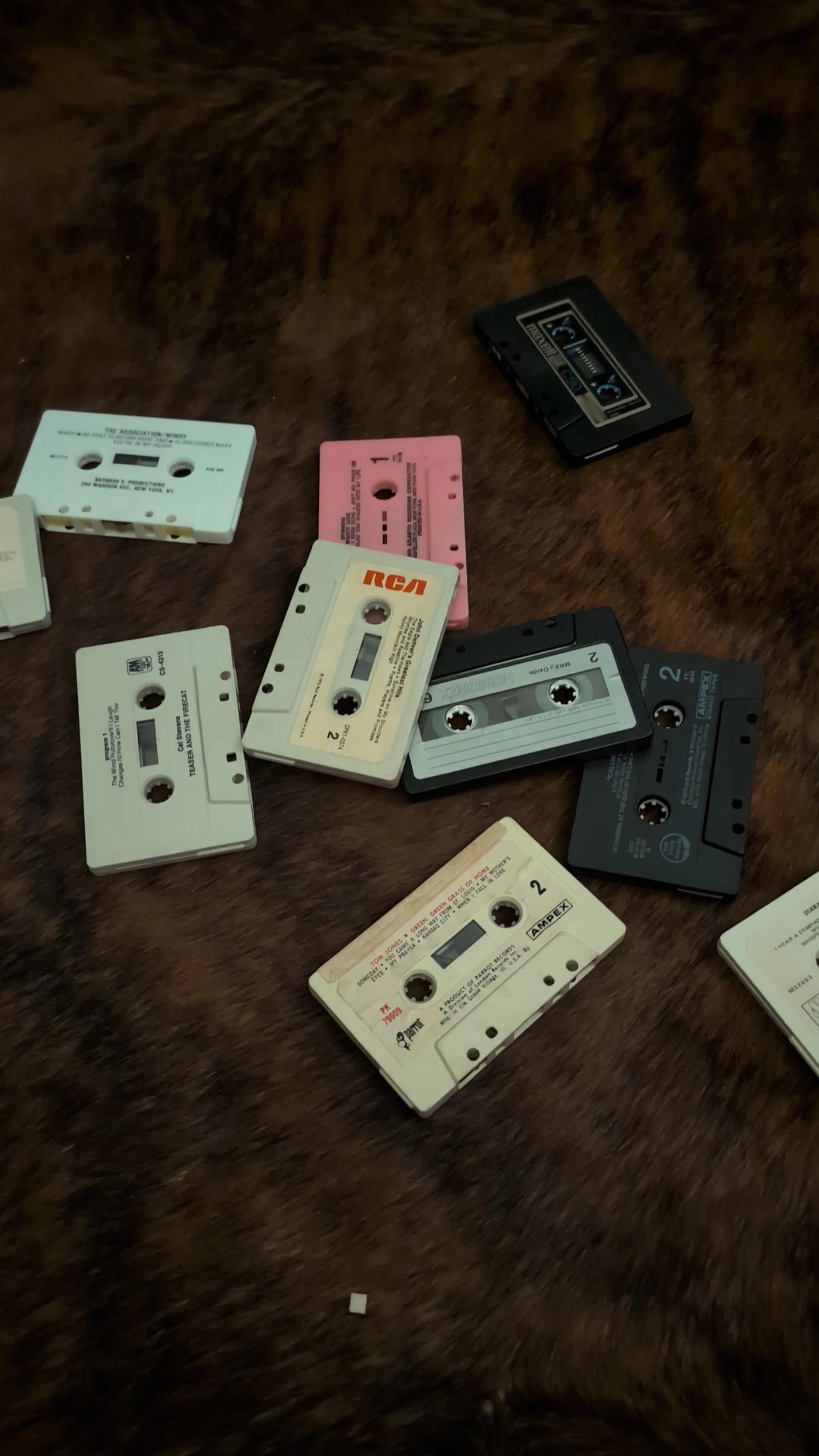
The loose tapes in the photograph below show how much visual variety that produced. There is a large orange RCA mark on one label, fine black text on another, a pink shell, and pale and dark surfaces sitting together on the wood. The side numbers are conspicuous. The layouts differ.
These details come directly from the studio's source footage. The still shows the labelled objects before artwork is printed over them. Their faces already contain a surprising amount of design.
A bold logo and a block of tiny type make different marks. When a fragment remains visible within an artwork, it brings its own spacing, weight, and direction. It can be interesting even before you manage to decipher it.
Two kinds of printing meet
Our contemporary images are UV printed onto real vintage cassette faces. Where an original label remains and a lighter part of the image allows some of it to show, the surface holds two different sets of visual information.
The artwork supplies its colour and subject. The surviving label supplies lettering that was put there for another purpose.
That is a different effect from the open areas discussed in Analog Reveal. There, the composition deliberately gives exposed material room around the image. Here, the interest is in the overlap: an older mark registering within a newer passage of colour.
A letter can become a small dark shape inside a pale field. A short rule can introduce a line that belongs to the label rather than the picture. Something originally designed to identify a recording becomes part of the way we look at an image.
It need not be prominent.
In fact, the small amount is much of the attraction. You notice it after the print has already caught your attention. There is no announcement. A cassette label has survived perfectly well without developing a personal brand.
Looking without supplying a biography
A readable label can tell you what was printed on the tape. That is useful, concrete information. It does not tell you who owned it, how often they played it, or whether the recording inside still matched the outside.
Anyone who has re-dubbed a cassette will appreciate the distinction. A label can remain admirably confident after the contents have changed.
So we enjoy what the surface actually offers. A title, when legible. A manufacturer mark. The shape of a numeral. Where the lettering is too faint to read, its visual presence can still matter.
There is no need to turn every fragment into an account of a stranger's life. The fact that it belongs to this physical object is already a worthwhile connection.
That also gives music its proper place in the artwork. A recognisable name may send you looking for a record, or remind you of something you know. The art remains an image built across cassettes. The musical association adds a particular point of interest.
What the photographs show
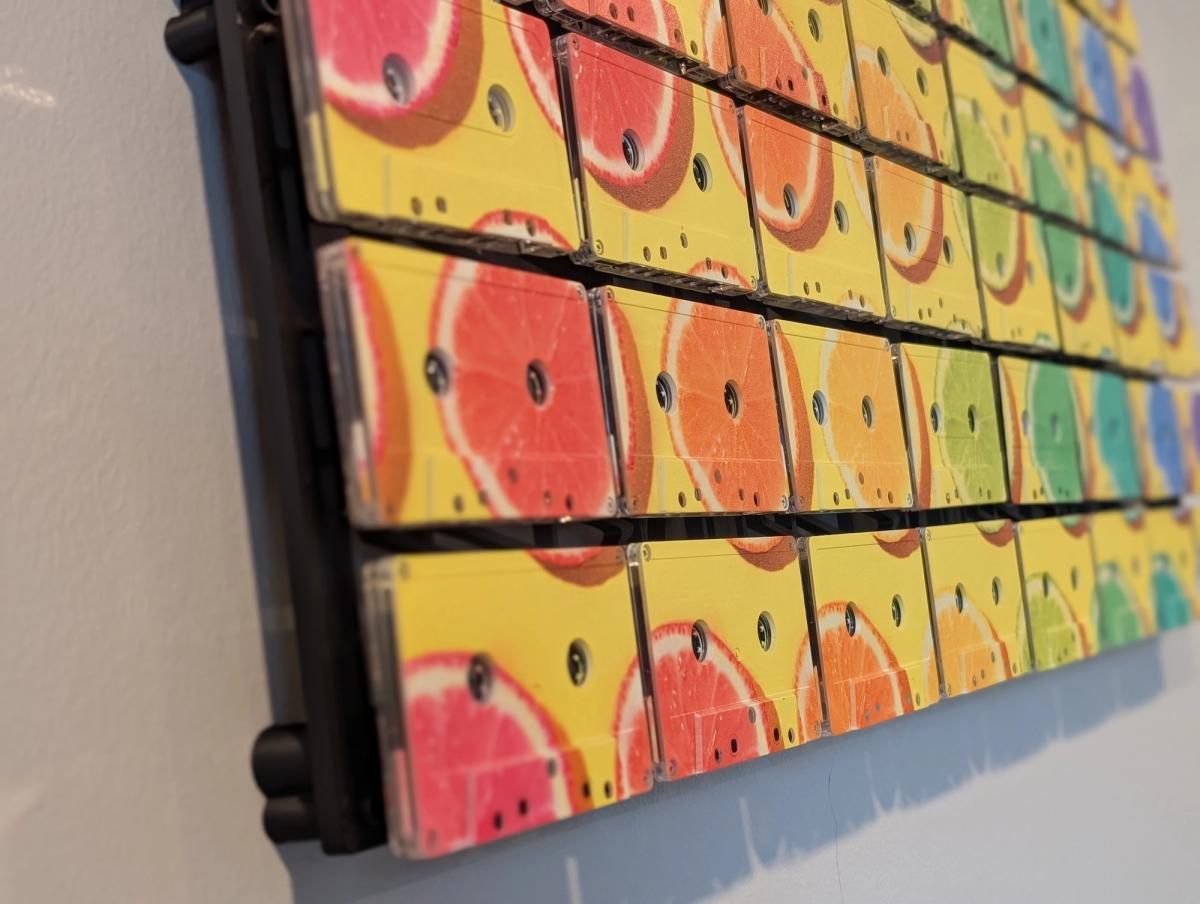
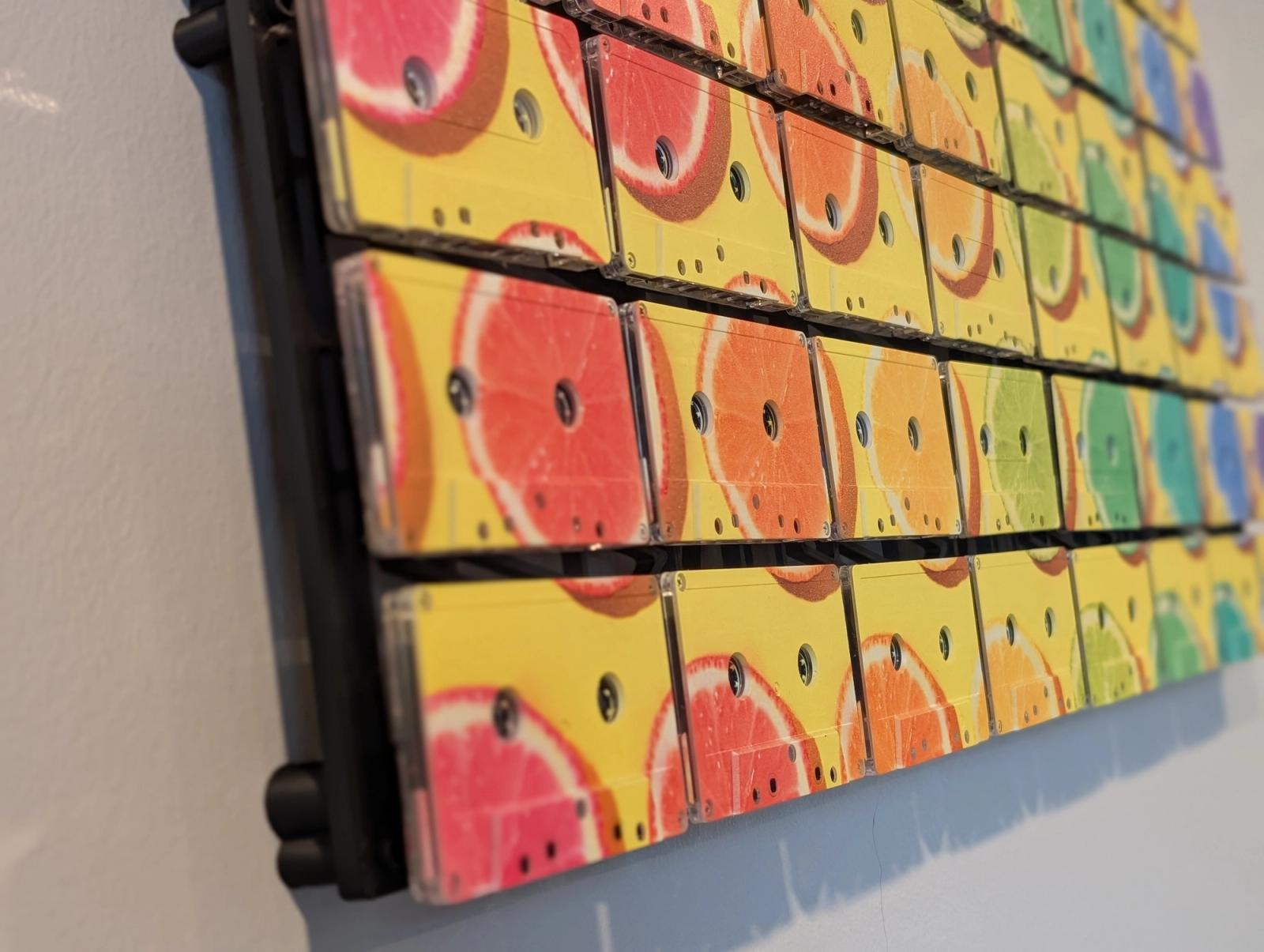
The citrus detail gives a useful view of the finished printed surface. Yellow and orange travel across several cassette faces, while the windows, openings, edges, and differences between shells remain visible.
Follow the lower edges of the orange passages. Fine changes in the surface sit within the colour, while the openings create much darker interruptions. The printed image has to accommodate both.
Compare that finished surface with the loose labels above. One photograph shows the variety of marks the material can carry; the other shows how an image occupies the cassette faces. They are examples of the material and the finished art, rather than a matched before-and-after set.
Choosing how much you want to notice
If this detail appeals to you, begin with an image whose lighter passages you already enjoy. Then inspect close photographs for the actual relationship between print and cassette.
Ask whether you like the extra marks within those passages. Would a faint line of type add interest to that part of the image? Do you want to recognise individual objects, or keep your attention mainly on the larger subject?
The answer can vary from one artwork to another. A tiny surviving mark may be welcome in a broad colour field and distracting beside an essential facial detail.
Our process page explains that original labels are preserved where possible. That qualification matters when choosing: shells and their labels vary, and a particular title or degree of visibility should not be assumed from a preview.
For a specific piece, use its actual photographs when available. If a particular label matters to your decision, ask the studio about that detail. A faint original title is a pleasure to discover; it is less useful as a promise made on behalf of a tape nobody has selected yet.
A small reason to keep looking
An artwork can become familiar without becoming exhausted. A minor detail gives you somewhere to return your attention, even on a day when the whole image passes almost unnoticed.
We value that kind of pleasure. There is something generous about an object that continues to reward ordinary looking, without requiring a special occasion.
The original label can provide one such detail. A little type, a little colour showing around it, and a cassette that remains identifiable within its new use.
Choose the image first. Leave yourself something small to find.
Explore your image on tape