The Tapes We Do Not Print
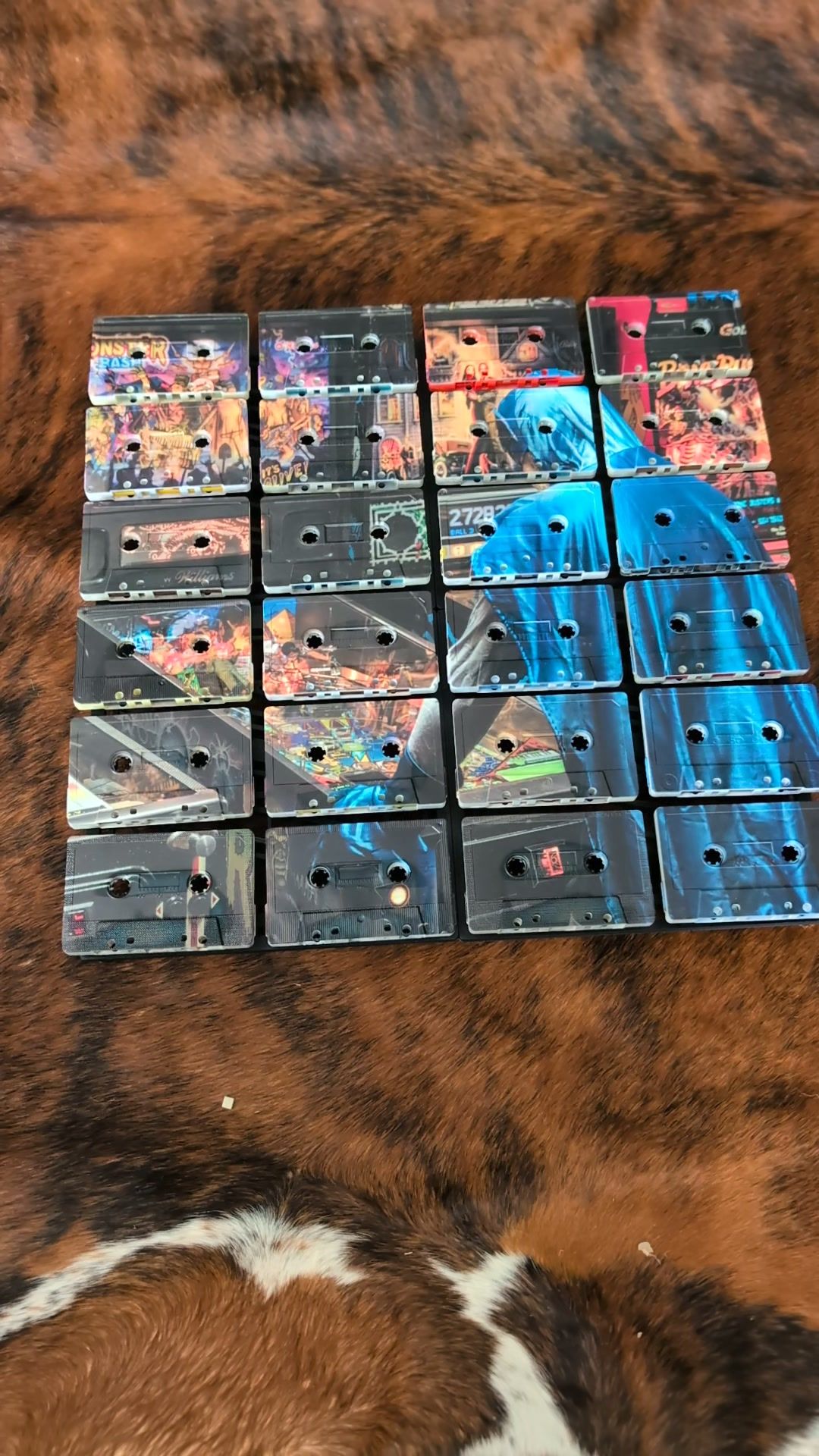
An original cassette label showing through a lighter part of a print can be exactly the detail we want. The small type, a side number, the edge of an old sticker: these things confirm that the image is sitting on real objects with earlier lives. Then, occasionally, the label tells us to stop.
That is the first decision in making a Mixtape Mosaic. Before a contemporary image is UV printed across a grid of vintage cassette faces, the tapes have to be considered as tapes. Most are sourced from material otherwise headed for landfill. If one turns out to be rare or worth preserving, it is kept playable and directed towards someone who will value it. The printing process renders the tapes we use unplayable, so a promising label is not merely an attractive bit of typography. It can be an exit sign.
At the time of writing, the Batman Forever version of Seal's “Kiss from a Rose” is playing from a cassette rescued from a box headed for landfill. Some tapes are also kept for the studio's personal collection. This is an excellent reminder that responsible sourcing is not an abstract virtue conducted by solemn people wearing archival gloves. Sometimes it is simply knowing when not to put something under the printer, then pressing play.
The first decision
Cassettes arrive with all the variety the format accumulated over decades: different shell colours, manufacturers' marks, printed labels, handwritten stickers, side numbers, screws, windows and the occasional correction made by someone with a biro and firm convictions. That variation is useful to the finished artwork. It also means every tape needs a look before it joins the working material.
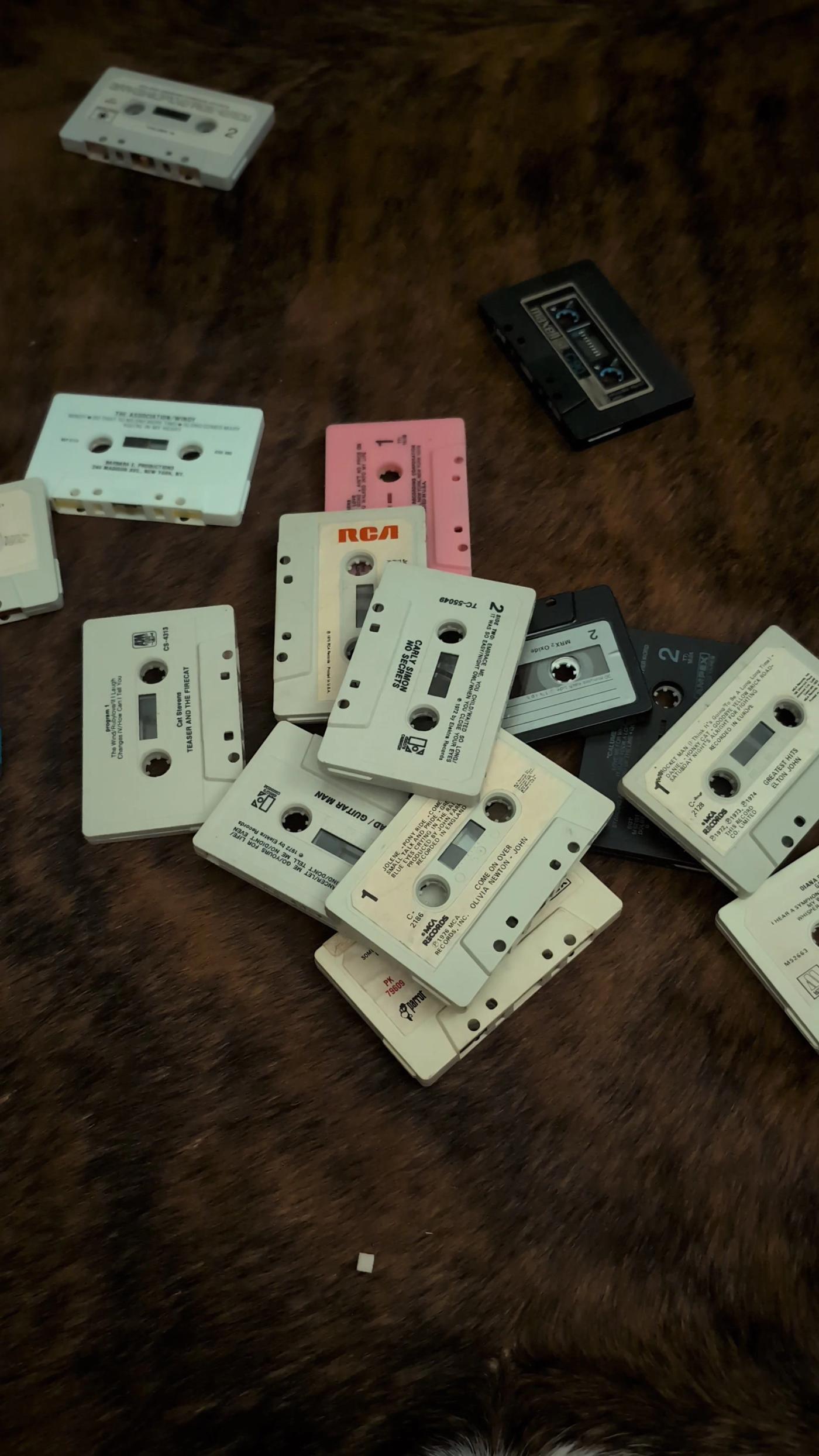
There is no benefit in pretending every old cassette is a lost masterwork. The medium was democratic, which is a polite way of saying it carried everything. Commercial albums, spoken-word programmes, home recordings, duplicated courses and things that made perfect sense to one household on a Tuesday in 1993 all used broadly the same little plastic rectangle. Age alone does not confer importance. It does, however, make inspection sensible.
The rule is straightforward. If a tape has value as a playable recording, that future comes first. Rare or worthwhile tapes can be passed towards collectors and listeners who will keep them in circulation. If a tape is common, damaged as a recording, or otherwise bound for disposal, it can become raw material for an artwork. The judgement happens before the image does.
The tape that kept playing
“Kiss from a Rose” is a useful example because it refuses to behave like background detail. The song appears on the 1995 Batman Forever soundtrack, an album whose official track listing moves from U2 to PJ Harvey, Brandy, Seal, Massive Attack and Tracey Thorn with the calm confidence of a person putting six entirely different dinners on one plate. It was the nineties. Compilation sequencing briefly operated under maritime law.
The point is not that every cassette should be auditioned in full before a decision can be made. That would turn an art studio into a very slow radio station. The point is that titles, editions and physical condition can identify a tape that deserves another route. A label is evidence. It can contribute to the artwork, as the lighter printed passages in some Mixtape Mosaics allow original details to remain visible, or it can indicate that this particular object should remain outside the composition.
This is also why we do not invent romantic histories for anonymous tapes. A handwritten label may be visually beautiful without granting us permission to decide who wrote it, where they drove with it, or which relationship collapsed halfway through Side B. The real marks are enough. Usually they are better.
What the selected tapes become
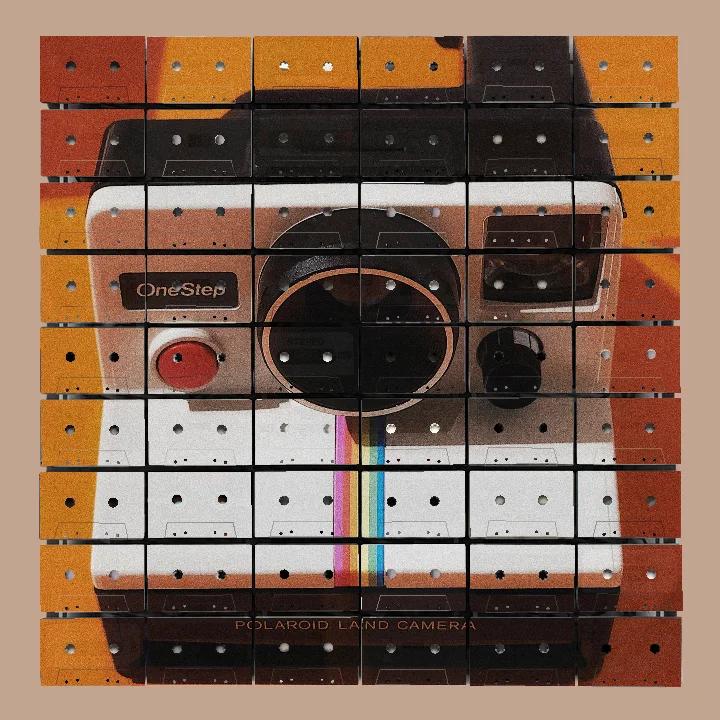
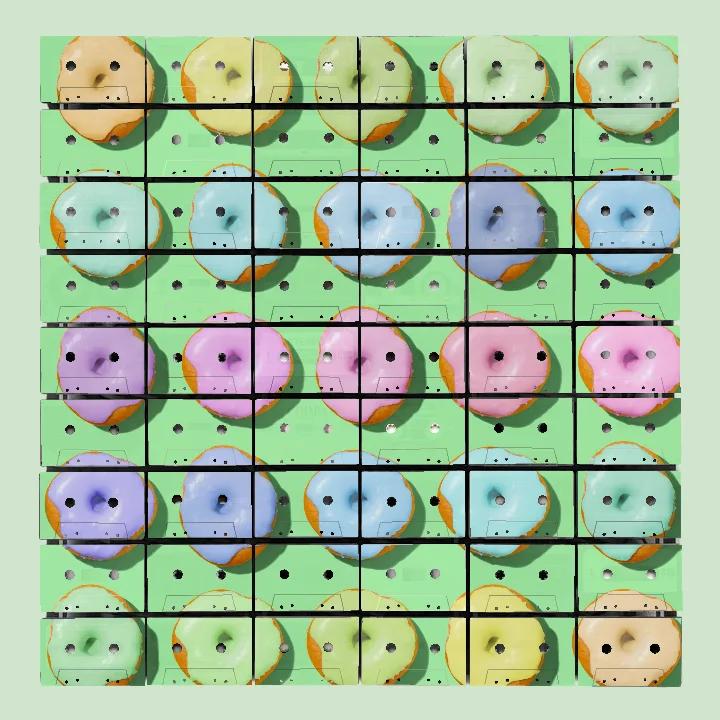
Once a tape has been selected as material, its role changes. Individual cassette faces are assembled into a dimensional panel-based wall artwork, and a contemporary image is UV printed across the group. The grid provides structure. Reel openings interrupt the picture. Shell edges catch light. Gaps and surface changes make small shadows that alter as the viewer moves.
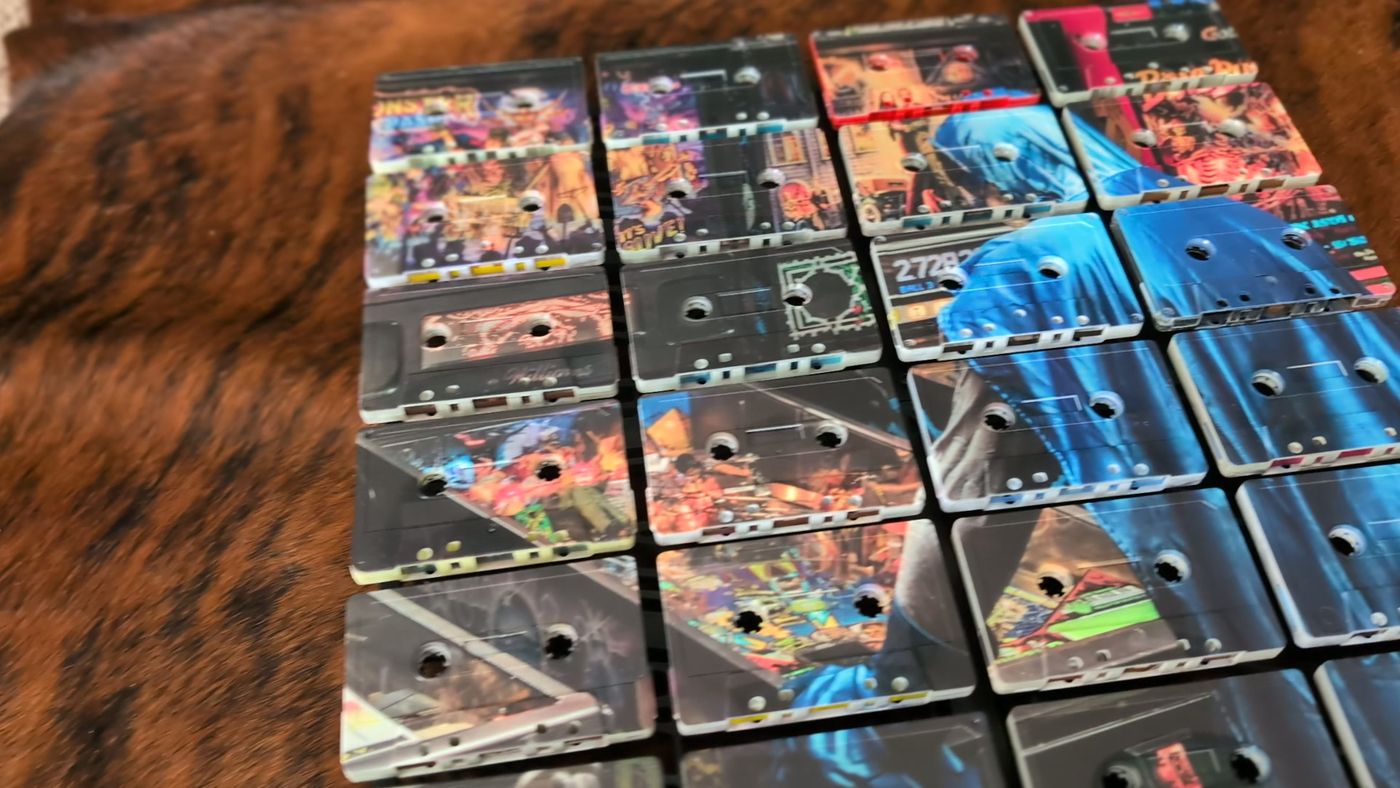
From across a room, the image leads. At a few feet, the cassette geometry becomes clear. Up close, small remnants of the source material may remain legible beneath lighter colour. None of these distances cancels the others. The work depends on holding them together: one image, many objects, a tidy grid with a slightly unruly physical surface.
This is where the sourcing decision becomes visible even when the viewer never knows the individual tapes. Uniform blank shells would be easier. They would also remove the tiny variations that keep the piece from behaving like a flat reproduction. A pale cassette beside a dark one, a circular opening cutting through colour, or a label edge remaining just present enough to be noticed gives the artwork its material argument. It is an image, certainly, but it has had to negotiate with twenty-four cassette faces to get there. The negotiations remain on view.
Two useful futures
There is an uncomfortable habit in discussions of reuse: everything old is treated as either sacred or rubbish, with very little space between. Cassettes deserve a more practical assessment. A worthwhile recording can continue to be played. A tape headed for landfill can become part of an artwork rather than waste. These are not rival forms of respect.
This is the honest part. Objects do not need to be saved in only one way. Some should remain themselves; others can take on a second use. Taking both futures seriously is how we respect the medium.
For the finished work, the result is not a monument to obsolete technology. It is contemporary wall art whose raw material happens to bring thickness, apertures, labels, colour shifts and shadows that a flat print cannot supply. The cassette matters because it does real visual work. The music connection matters because the object once had a different job, and occasionally still deserves to keep it.
See how the artwork is madeThe Mixtape
J-card: “THE TAPE THAT WAS SPARED”
Ten selections from Rhino's official Batman Forever soundtrack track listing.Side A
- U2, “Hold Me, Thrill Me, Kiss Me, Kill Me”: the opening needs something built for a title sequence and a wall larger than strictly necessary.
- PJ Harvey, “One Time Too Many”: a hard change of texture, because no responsible compilation should become comfortable this early.
- Brandy, “Where Are You Now?”: clear melody after the abrasion, placed where a C90 would briefly appear to have manners.
- Seal, “Kiss from a Rose”: the actual reason this particular tape stayed a tape.
- Massive Attack and Tracey Thorn, “The Hunter Gets Captured by the Game”: shadow, restraint and a bass line that makes the side ending feel architectural.
Side B
- Eddi Reader, “Nobody Lives Without Love”: a quiet reopening, which Side B is uniquely qualified to provide.
- Mazzy Star, “Tell Me Now”: haze without vagueness; every edge remains exactly where it should be.
- The Offspring, “Smash It Up”: a necessary jolt before the sequence becomes too well behaved.
- Nick Cave, “There Is a Light”: the room darkens, but the tape does not lose its nerve.
- Method Man, “The Riddler”: an ending with enough weight to make rewinding feel like the sensible next action.