Restoring the Boombox Aesthetic
The boombox became lodged in the doorway because I had forgotten about the handle.
This is an embarrassing sentence for anyone claiming even modest familiarity with portable audio equipment. A boombox without a handle is merely a stereo with aspirations. The handle is the entire constitutional premise.
Nevertheless, there I stood, rotating a large plastic rectangle through angles last attempted by early furniture movers, while the eject button repeatedly pressed itself against the doorframe. Each impact opened the cassette deck with a little mechanical sigh, as if the machine were filing a complaint.
I could not blame it.
An object that refuses to whisper
A boombox was never designed to disappear.
It had speaker grilles, buttons, sliders, meters, chrome, plastic, antennas, a handle, and a cassette door placed near the center like an altar to recorded intention. Even when silent, it occupied the room with the confidence of a regional magistrate.
This is what people mean, whether they know it or not, when they respond to the boombox aesthetic. It is not simply nostalgia for a decade. It is affection for an object that explains itself through shape.
The speakers announce where sound emerges. The buttons show what can be pressed. The cassette door reveals where the music goes. The handle declares that all of this can be carried outside, although it declines to discuss the batteries.
Modern devices often conceal their workings behind smooth glass. Analog equipment displayed its functions openly. It was less mysterious and somehow more theatrical.
According to the Royal Society for Visible Buttons, this transparency improved civilization by 14 percent between 1978 and 1992.(1) The society's funding remains opaque.
Scale as a form of punctuation
The classic boombox had scale. Not always enormous scale, but deliberate scale.
It was made to be seen across a room, on a shelf, in a park, or on a shoulder belonging to someone with better posture than the rest of us. Its proportions were broad, graphic, and balanced around repeated circles, rectangles, slots, and controls.
A Mixtape Mosaic inherits some of that visual confidence.
From across the room, the artwork reads as one complete image. Up close, it gives way to the physical vocabulary of cassette tapes: hubs, label windows, screw holes, scuffs, shell colors, and the small shadows between individual objects.
The result has wall presence because it has actual depth. It does not merely depict texture. It possesses texture and is prepared to provide references.
The cassette grid and the machinery of rhythm
Look closely at analog audio equipment and repeated geometry appears everywhere.
Speaker perforations. Rows of buttons. Equalizer sliders. Meter marks. Vents. Cassette windows. The objects are full of small systems arranged inside larger systems.
The cassette grid belongs naturally to this family. Each tape is a hard rectangle containing two circular hubs and a field of labels, openings, and molded details. Arrange many tapes together and the repetition creates rhythm before the transferred artwork is even visible.
Bright color adds energy. Hard edges add structure. Vintage variation keeps the grid from becoming sterile.
We sometimes describe the work as analog neo-brutalist art. The term sounds as if it requires a concrete municipal library and a person in black spectacles, but the principle is simple: direct materials, visible structure, substantial scale, and no embarrassment about how the object is made.
Nostalgia is not a museum permit
There is a danger in retro design. One can become so devoted to recreating the past that the room begins to resemble a historically accurate electronics aisle.
That is not our ambition.
The cassette brings memory, but the artwork can be contemporary. It might be a personal photograph, a pet portrait, an abstract field, a surreal figure, bold typography, a city scene, or something involving a pink donut of unusual authority.
The old material and new image meet in the same object. Nostalgia becomes a starting point rather than a destination.
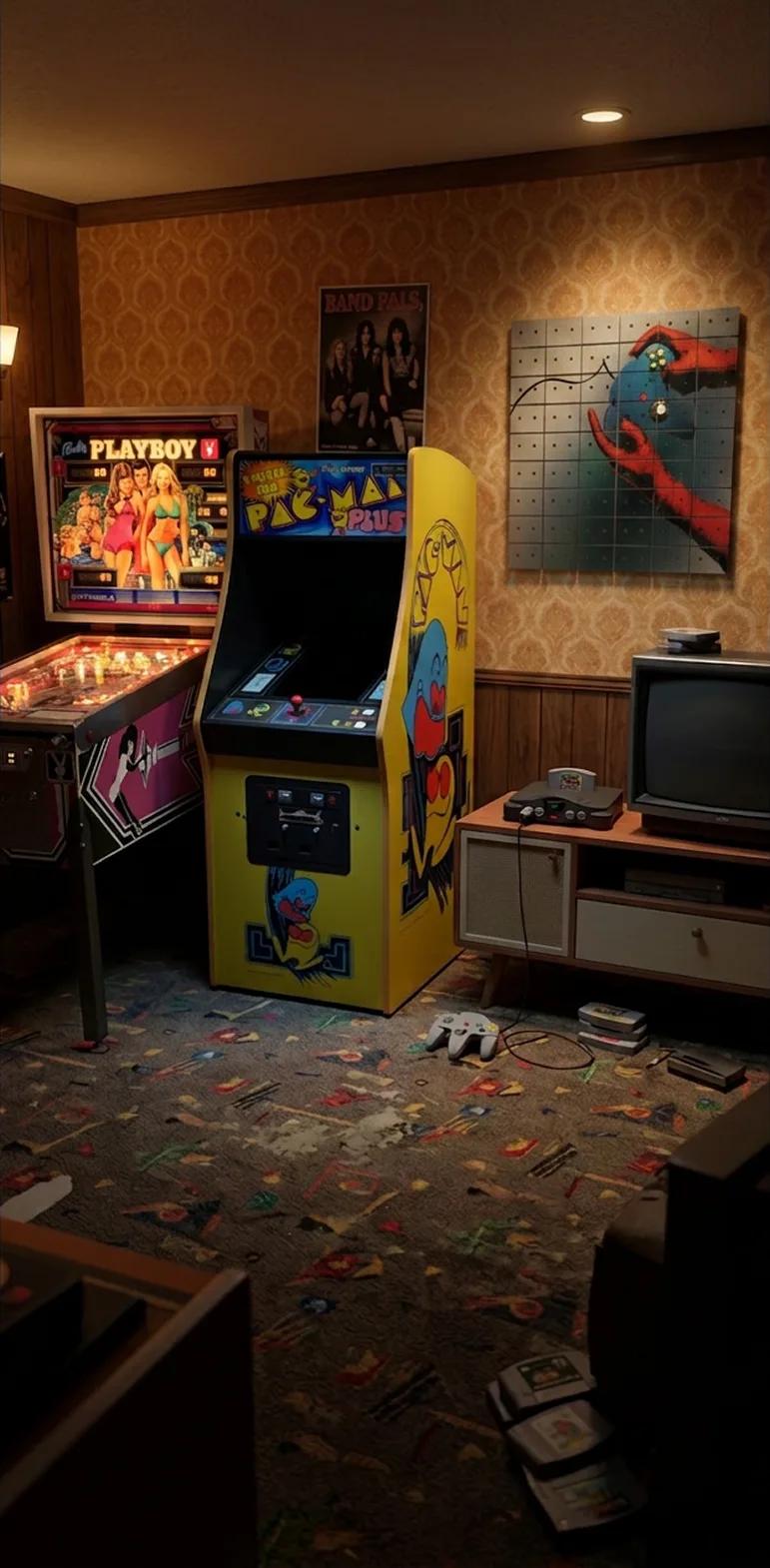
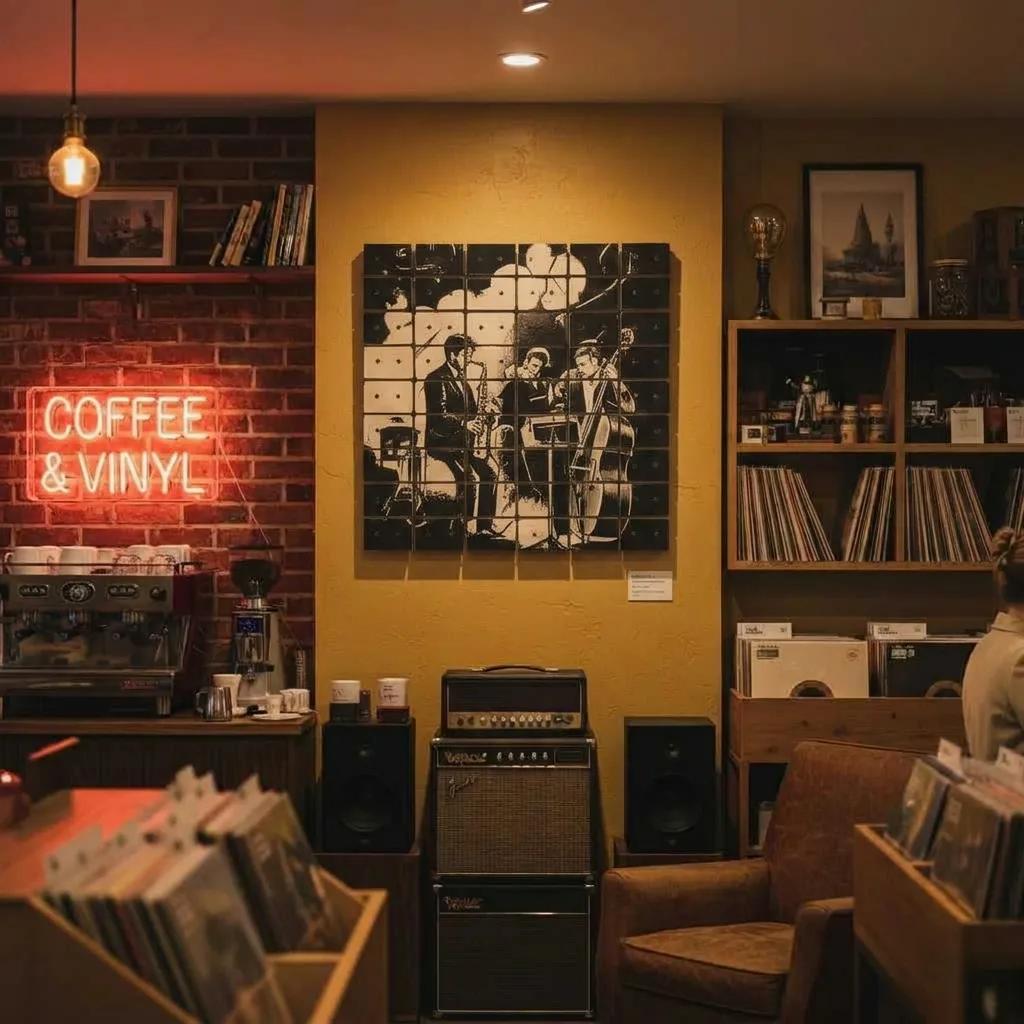
This allows cassette wall art to belong in more than a music room. It can hold a living space, creative studio, arcade, retail interior, coffee-and-vinyl shop, or any wall that has grown tired of behaving like background infrastructure.
Only a fool, or a Deputy Curator of Beige Corridors, would deny the wall its chance.
Turning a file back into an object
Most photographs now live inside devices. They are viewed briefly, shrunk into thumbnails, and stored among screenshots of parking locations and recipes nobody remembers saving.
A custom Mixtape Mosaic reverses that movement.
A digital file becomes a made-to-order physical artwork. The image gains scale, weight, texture, edges, installation, and a permanent relationship with a room. Every vintage cassette carries one fragment. The modular backplate and magnetic mounting system bring those fragments together on the wall.
The process usually takes two to three weeks before shipping, depending on order volume, artwork review, and sourcing the right mix of tapes. This is not instant, which is a feature increasingly mistaken for a medical condition.
Physical things take time because they insist on happening somewhere.
The machine in the doorway
I eventually lowered the boombox handle and carried the machine through the doorway without further diplomatic difficulty.
The solution was obvious, which is why it took several minutes.
That small embarrassment returned me to the reason analog objects remain compelling. They ask us to notice their dimensions, controls, mechanisms, and limits. They have a body. They make us negotiate with the physical world, even when the negotiation concerns a doorframe and our own lack of foresight.
In the end, what I learned is this: if an object refuses to disappear, give it the wall it deserves. Also lower the handle.
Notes of dubious authority
- Royal Society for Visible Buttons, Annual Report on Pressability and Public Morale, 1986.
- The historically accurate electronics aisle remains controversial among museum gift-shop planners.